
- About
- Academics
- Admissions & Aid
- Life
- Centers, Research & AI
- Centers
- Andrew Young Center for Global Leadership
- Martin Luther King Jr. Collection
- Center for Black Entrepreneurs
- Center for Broadening Participation in Computing
- Center for Excellence in Education
- Center for Sustainability
- Ida B Wells Society
- Innovation and Entrepreneurship Center
- Morehouse Writing Center
- Institutes
- Research at Morehouse
- AI at Morehouse
- Centers
- News & Events
- Open House

Kimberly St. Julian-Varnon, Ph.D.
Faculty
Humanities, Social Sciences, Media and Arts (HSSMA) Division
History and Africana Studies
Contact Me: kimberly.stjulianvar@morehouse.edu
Office Location: Brawley Hall 202K
- Assistant Professor of Mathematics
Education
University of Pennsylvania, 2026
Doctor of Philosophy, History
University of Pennsylvania, 2022
Master of Arts, History
Harvard University, 2014
Master of Arts, Russian, East European and Central Asian Studies
Swarthmore College, 2012
Bachelor of Arts, History
More about Me
-
Honors and Awards
Honors and Awards
University of Pennsylvania:
- Penn Presidential Fellowship
- Penn Global Dissertation Research Fellow
- Cold War Archives Research Fellowship
-
Research and Interests
Research and Interests
- Soviet nationality policy
- Race and ethnicity in Imperial Russia, the Soviet Union, Russia, Ukraine, and East Germany
- African and African Diasporic racial identity and experience in the USSR and East Germany
- Contemporary Russo-Ukrainian relations
-
Selected Publications or Projects
Selected Publications or Projects
Black Like Us: African American travelers in Soviet Central Asia. (in press). In V. Plumly & T. N. Florvil (Eds.), Innovations in Black European studies. Peter Lang.
‘How difficult it is to live, desperately difficult’: Everyday life and subjectivity during the Holodomor. (in press). In O. Vynnyk (Ed.), Narrating the Holodomor. University of Toronto Press.
Histories of race in Europe and questions of knowledge production [Roundtable discussion]. (2025). European History Quarterly, 55(2), 173–218. https://doi.org/10.1177/02656914251328511
Blackness in the red land: African Americans and identity in the ‘colourless’ Soviet Union. (2024). In B. Gorski & P. Gleissner (Eds.), Red migrations: Marxism and transnational mobility after 1917 (pp. 319–342). University of Toronto Press.
-
Teaching
Teaching
- History of Modern Europe
- World History I and II
-
Service and Affiliations
Service and Affiliations
- Association for Slavic, Eastern European, and Eurasian Studies
- Association for Women in Slavic Studies (AWSS)
-
Featured Video/Podcase
Featured Video/Podcast
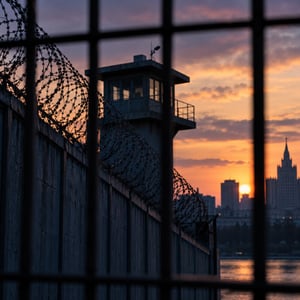 The November 17, 2022 VICE News System Error episode, “Why State Kidnappings Are on the Rise,” examines the growing practice of governments detaining foreign nationals as political bargaining chips. Often described as hostage diplomacy, this tactic allows governments to pressure other countries into prisoner exchanges, diplomatic concessions, or other political agreements. The documentary explores how state-sponsored detentions blur the distinction between legitimate law enforcement and politically motivated imprisonment, placing innocent individuals at risk. It also raises concerns about the difficult choices governments face when negotiating their citizens' release, particularly whether prisoner exchanges encourage future detentions. Ultimately, the episode highlights the human consequences of geopolitical power struggles and the challenges of protecting citizens abroad.
Honors and Awards
University of Pennsylvania:- Penn Presidential Fellowship
- Penn Global Dissertation Research Fellow
- Cold War Archives Research Fellowship
Research and Interests
- Soviet nationality policy
- Race and ethnicity in Imperial Russia, the Soviet Union, Russia, Ukraine, and East Germany
- African and African Diasporic racial identity and experience in the USSR and East Germany
- Contemporary Russo-Ukrainian relations
Selected Publications or Projects
Black Like Us: African American travelers in Soviet Central Asia. (in press). In V. Plumly & T. N. Florvil (Eds.), Innovations in Black European studies. Peter Lang.
‘How difficult it is to live, desperately difficult’: Everyday life and subjectivity during the Holodomor. (in press). In O. Vynnyk (Ed.), Narrating the Holodomor. University of Toronto Press.
Histories of race in Europe and questions of knowledge production [Roundtable discussion]. (2025). European History Quarterly, 55(2), 173–218. https://doi.org/10.1177/02656914251328511
Blackness in the red land: African Americans and identity in the ‘colourless’ Soviet Union. (2024). In B. Gorski & P. Gleissner (Eds.), Red migrations: Marxism and transnational mobility after 1917 (pp. 319–342). University of Toronto Press.
Teaching
- History of Modern Europe
- World History I and II
Service and Affiliations
- Association for Slavic, Eastern European, and Eurasian Studies
- Association for Women in Slavic Studies (AWSS)
Featured Video/Podcast
The November 17, 2022 VICE News System Error episode, “Why State Kidnappings Are on the Rise,” examines the growing practice of governments detaining foreign nationals as political bargaining chips. Often described as hostage diplomacy, this tactic allows governments to pressure other countries into prisoner exchanges, diplomatic concessions, or other political agreements. The documentary explores how state-sponsored detentions blur the distinction between legitimate law enforcement and politically motivated imprisonment, placing innocent individuals at risk. It also raises concerns about the difficult choices governments face when negotiating their citizens' release, particularly whether prisoner exchanges encourage future detentions. Ultimately, the episode highlights the human consequences of geopolitical power struggles and the challenges of protecting citizens abroad.